logger.debug causes performance issues
A logger is preferred in a formal project, because we can set different levels for different loggers, redirect log messages to files (even to remote servers), specify a unified format for logs and etc.
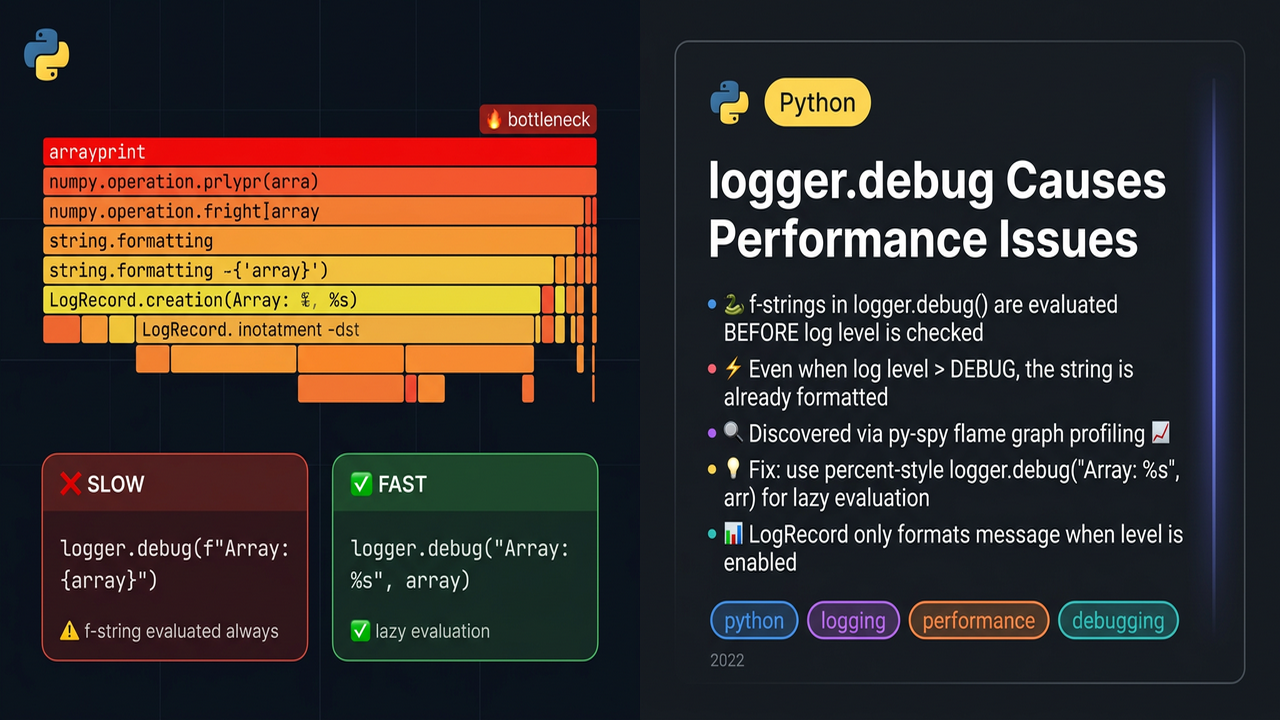
Recently I am using py-spy to create a flame graph for my program in order to find out which part is slow.
1
py-spy record -o profile.svg -- python a.py
After generating profile.svg and view it using a browser, I found that there are a lot of arrayprint clauses from numpy package. The clauses are similar as following:
1
2
array = np.array([1,2,3,])
logger.debug(f"Array: {array}")
I have added a bunch of debug codes to help me find problems during the developing stage. To me, it should not cause any performance problem if the log level is higher than DEBUG.
After reading the code, it is obvious that, use f-str does not help here. f-str is the message, it is the log record itself.
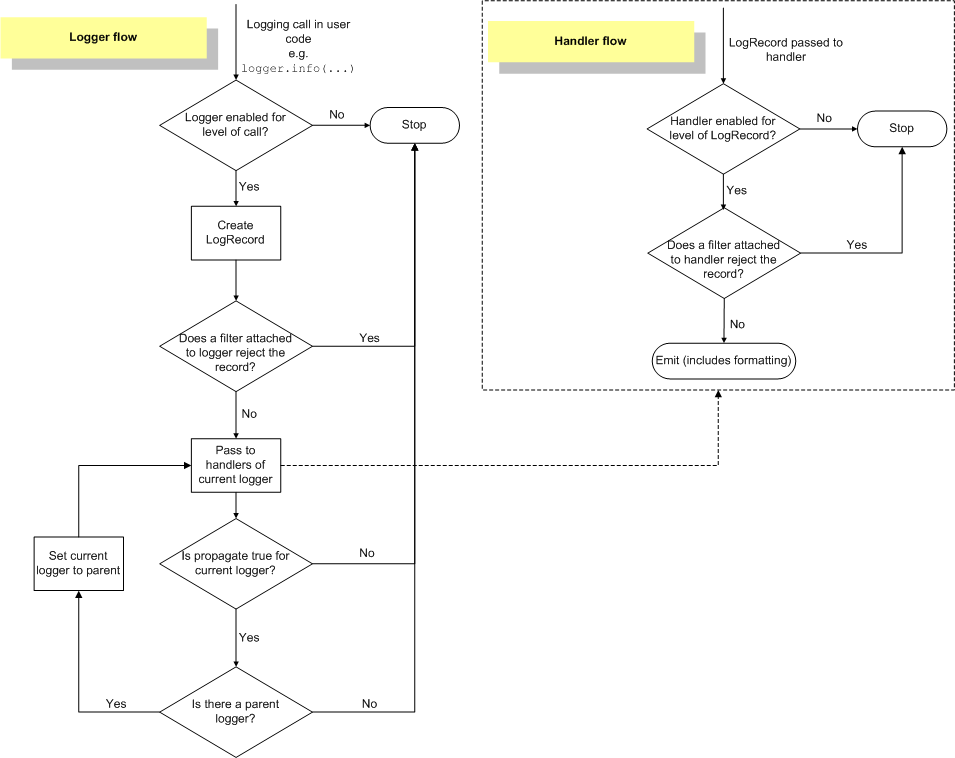
Link. By default, no LogRecord is created if the corresponding level is not enabled. A LogRecord is created using string formatting.
1
2
3
4
5
6
7
8
9
10
11
def getMessage(self):
    """
    Return the message for this LogRecord.

    Return the message for this LogRecord after merging any user-supplied
    arguments with the message.
    """
    msg = str(self.msg)
    if self.args:
        msg = msg % self.args
    return msg
if We change the log related code as following:
1
logger.debug("Array: %s", array)
There will be no LogRecord created, no arrayprint from numpy code will be called.
Have fun!